Emergency!
“Engine 51, Truck 51…”
In the grand scheme of things, this was not an especially major emergency. But it reminded me of Station 51, so I had to name this post in honor of the 1972 TV show.
We take modern emergency services almost for granted, but they haven’t been around as long as you might think. Emergency! featured fictionalized Los Angeles County Fire Department paramedics and was credited with spreading modern paramedic services across the United States and the world. The pilot episode even features lawmakers and doctors debating California’s 1970 Wedworth-Townsend Paramedic Act, the real-life law that allowed paramedics to work in the state.
Though California and Los Angeles were early adopters, they were not the first in the nation. That would be Pittsburgh’s Freedom House Ambulance Service, which operated from 1967 to 1975 and was staffed entirely by Black people. It’s a triumphant and tragic story worth hearing about in detail – the book American Sirens by Kevin Hazzard does a pretty good job.
What Happened
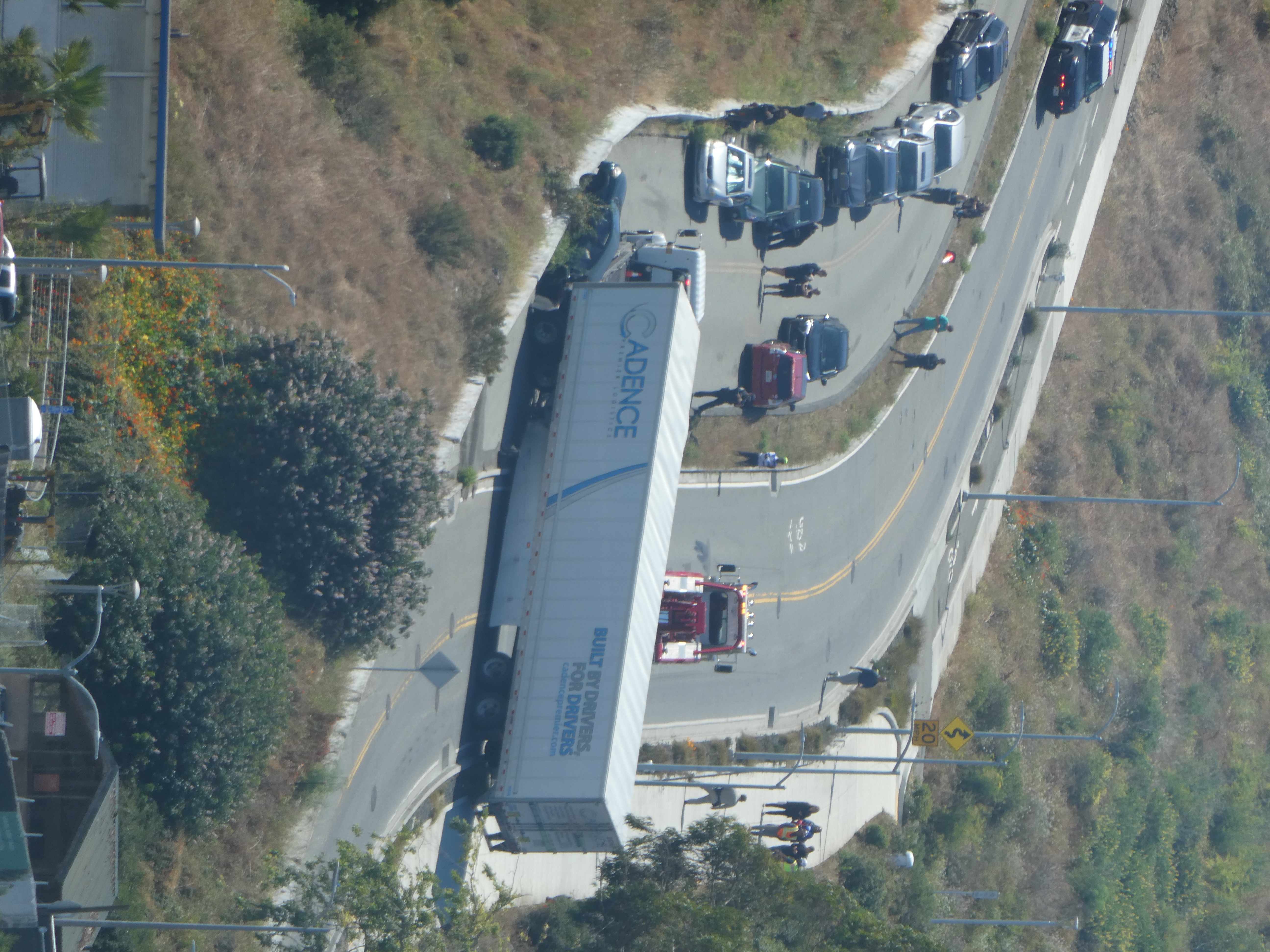
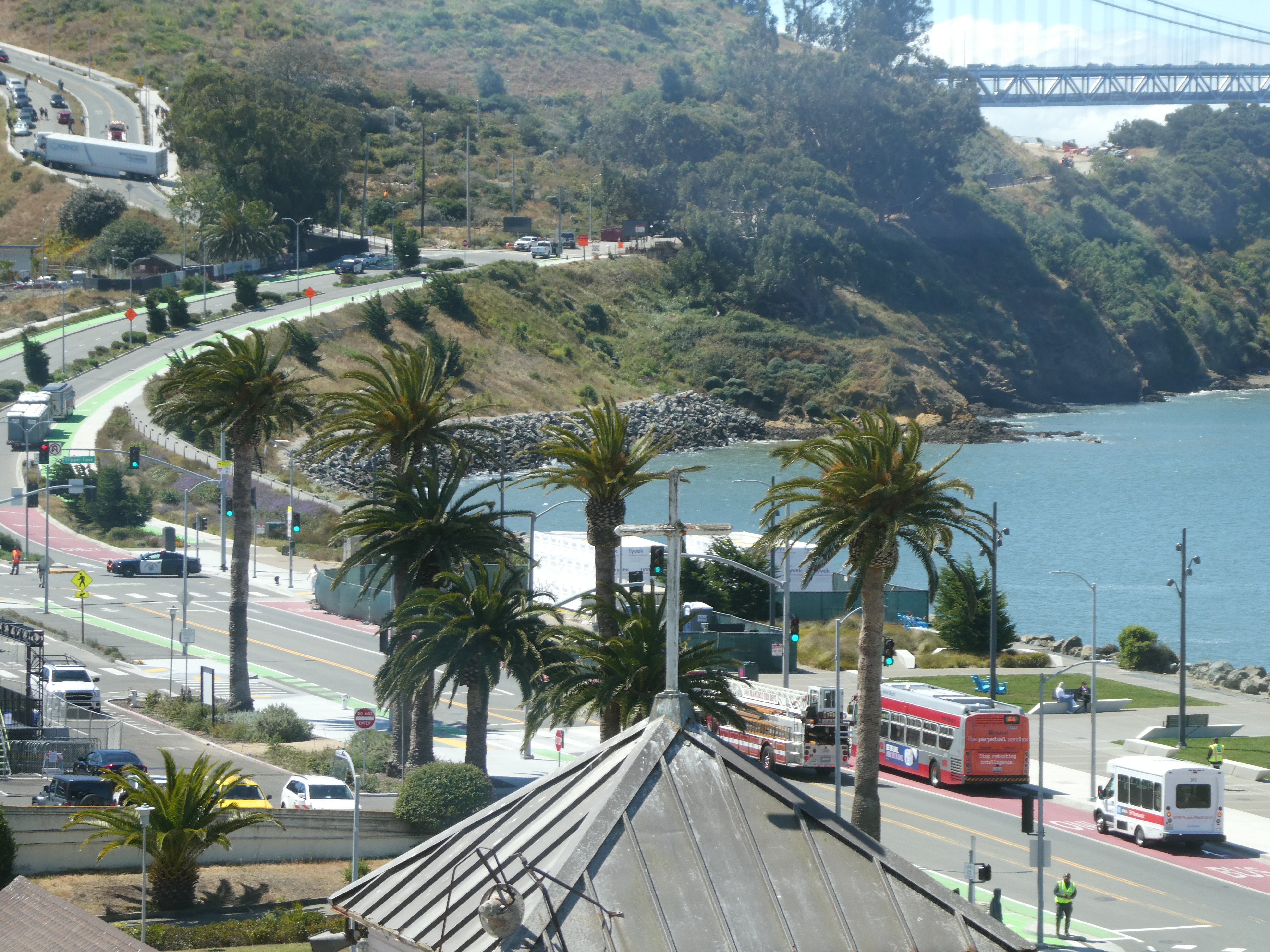
Around 10:30 am on Tuesday, June 9 2026 a semi truck lost control and departed the roadway on the steep slope of Macalla Road between Treasure Island Road and Yerba Buena Road, blocking both directions. The truck also pushed a parked sedan into a concrete barrier, leaving it with one wheel dangling over the edge. Nobody was injured in the crash.
For now, Macalla Road provides the only vehicular access connecting Treasure Island with the Bay Bridge and the outside world. It’s located on one of the steeper slopes of Yerba Buena Island. Macalla currently has one general purpose lane in each direction, plus a sidewalk and uphill-only protected bike lane. When Treasure Island Road reopens, Macalla will convert to one-way downhill operation, with Treasure Island Road handling uphill traffic.
The Response
The incident was discussed at the June 10, 2026 Treasure Island Development Authority Board Meeting (starting around 16:14 in the recording). San Francisco’s Department of Emergency Management coordinated the city’s response.
Besides the obvious task of getting the truck unstuck, the city also staged an ambulance just uphill of the closure in case anyone needed emergency transport. Treasure Island has a small fire station, so the TI ambulance would take a patient to just below the stuck truck, then they could be manually carried around the truck and into the uphill ambulance. Luckily nobody needed this service on that day.
Public messaging was adequate enough to be informed about what was going on, but options were limited.
The Treasure Island Ferry provided some additional trips. Buses of course could not enter or leave the island, but a single Muni bus actually did get stuck on the island. It stayed put, but it could have been useful to circle the island to get people to and from places like Island Cove Market, new and old housing, and the ferry terminal.
The roadway reopened at around 1:45pm.
The Future
Being without mobility is an unsettling feeling. In this case it happened because of a crash, but the broader point is that TI and YBI are, in some ways, fragile places. This 4th of July the islands were inundated with traffic to the same result – enough gridlock to make it infeasible to travel by car or bus. It’s a good idea to be aware of your surroundings, avoid risky activities when travel is difficult, and keep a stock of food and water for emergencies.
Even an ebike is a pretty good insurance policy – the truck actually didn’t block the bikeway at all, and in any case it was possible to walk around the closure. It’s easy to reach the East Bay in 30 minutes via the Bay Bridge Trail.
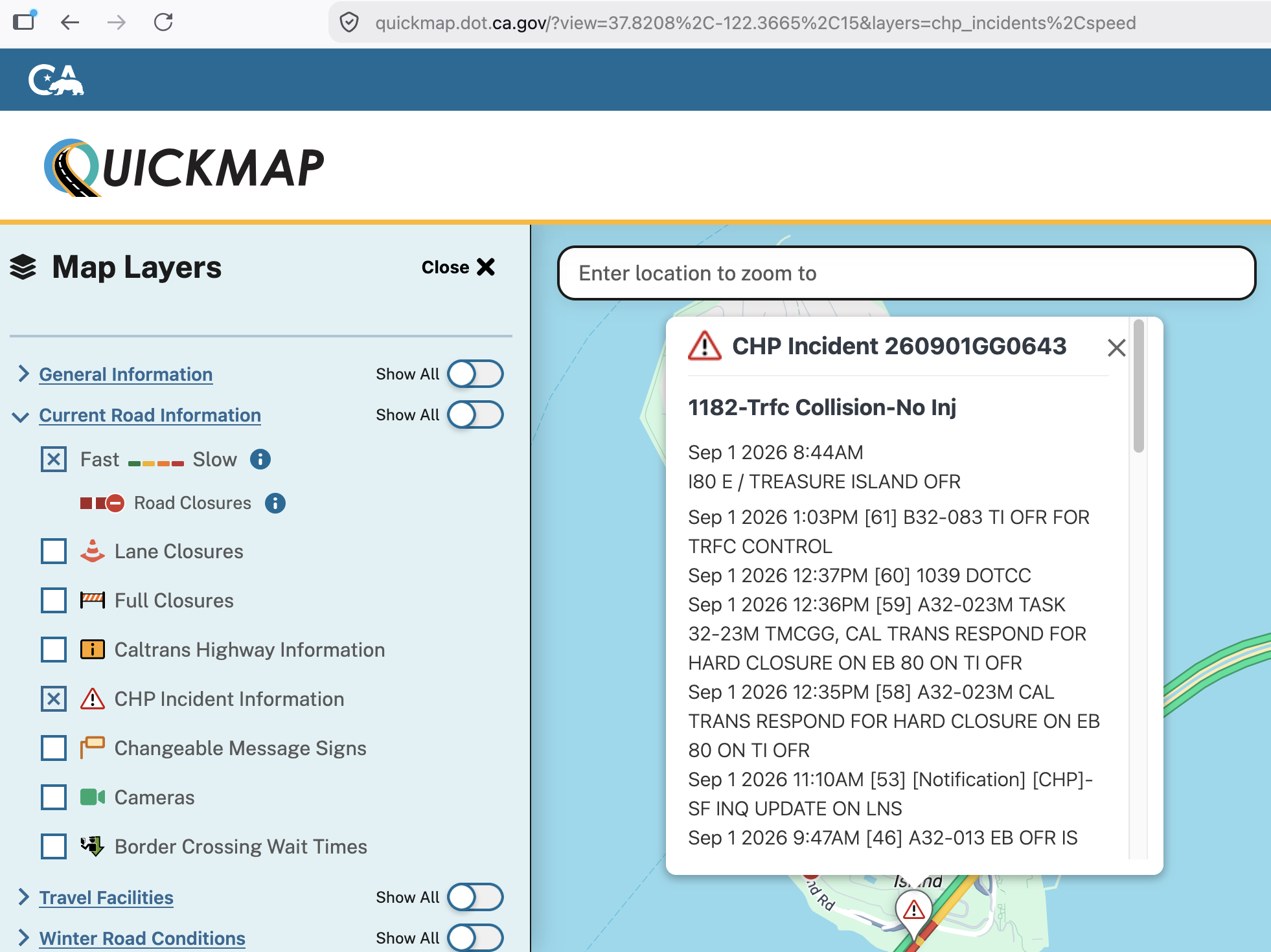
A less disruptive version of this actually happened again – on Tuesday September 1 a vehicle crashed on an offramp to Yerba Buena Island, with the response closing both offramp to the islands for a few hours. It still seemed possible to leave the islands by road during that time, making it less of a hazard but still a bummer for anyone needing to get home.